Do you want to know how to identify trend reversal ahead of time, guaranteed?
Well, it doesn’t exist.
No trading system or methodology can.
There isn’t a best trend reversal indicator out there either.
However…
The closest thing you’ll get is to learn how to read the price action and identify potential areas where the market could reverse.
And this is what you’ll learn in today’s post:
- How to identify trend reversal by analyzing price action of the markets
- How to tell where the markets will possibly reverse from (with heightened accuracy)
- How to identify high probability trend reversal
Ready?
Then let’s begin…
How to identify trend reversal — identify weakness in the trending move
First, let me define what a trending move is…

A trending move is the “stronger” leg of a trend and it trades in the same direction of it (that’s why I call it trending move).
The trending move (in a healthy uptrend) usually has more bullish than bearish candles; the bullish candles are relatively larger than the bearish ones, and the bullish candles closing near the highs
An example:

However:
When the bullish candles are getting smaller, it’s telling you the buying pressure is getting weak, or there is equal selling pressure coming in.
An example:
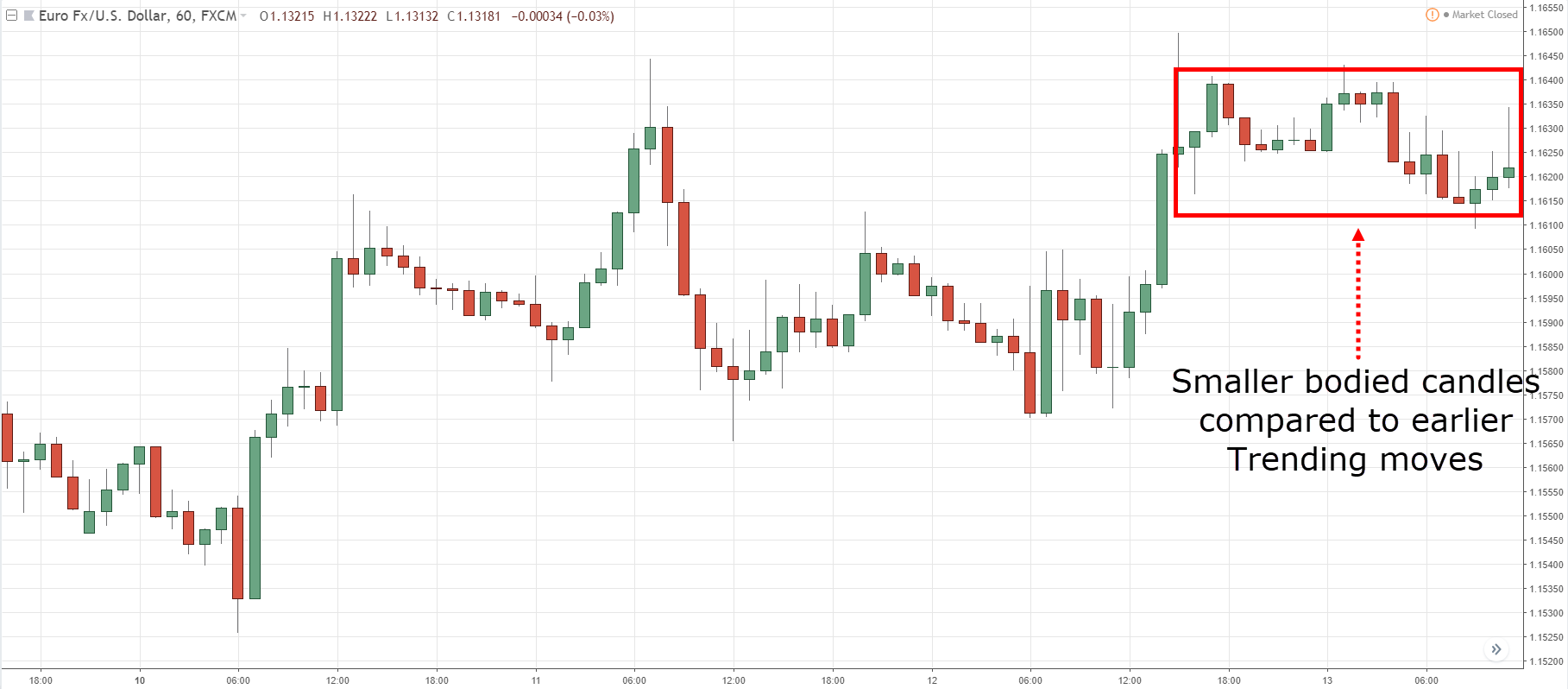
Now, this doesn’t guarantee the market will collapse lower. But it’s a tell-tale sign the buyers are getting weak and may need a “pause” before staging another move higher.
Next, you’ll learn about the retracement move…
Identify strength in the retracement move
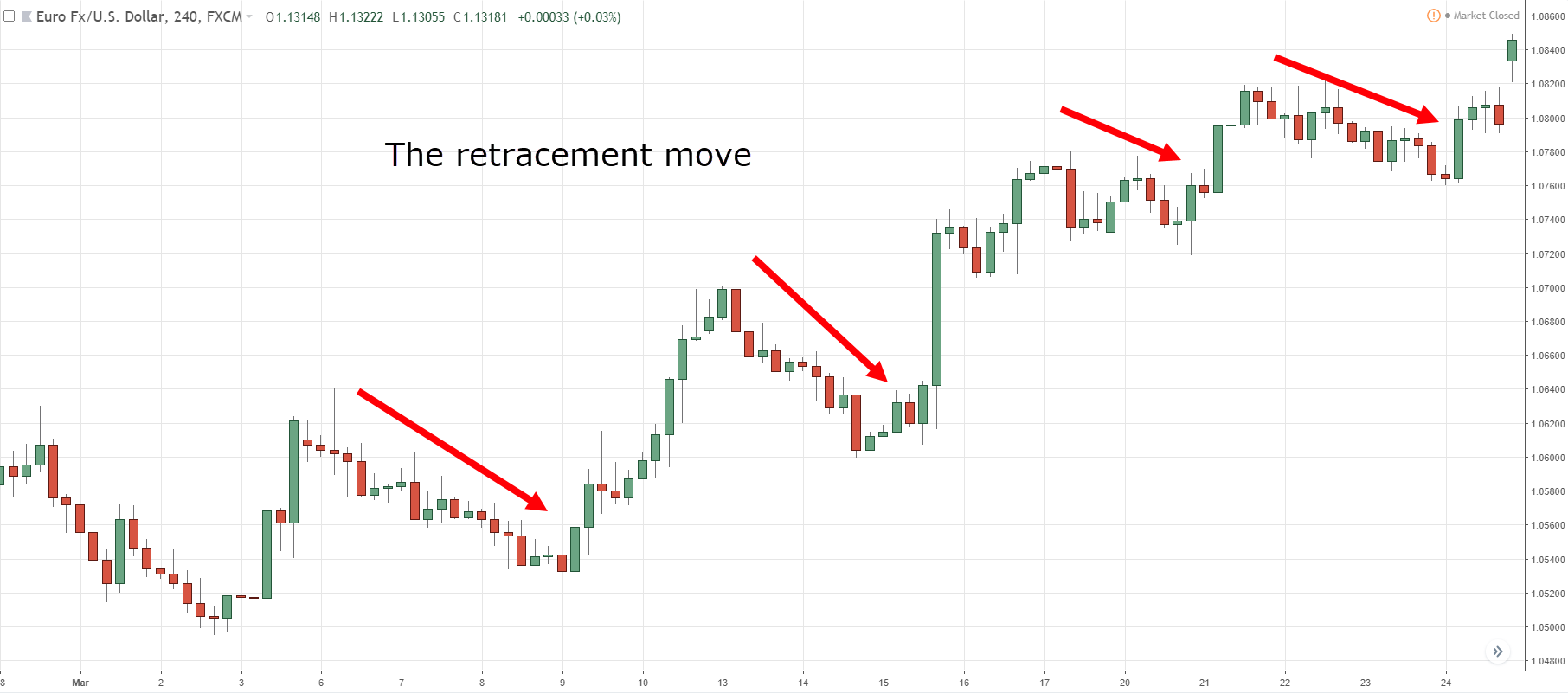
A retracement move is the opposite of the trending move. It’s the “weaker” leg of a trend and it trades against the direction of it (that’s why I call it retracement move).
The retracement move (in a healthy uptrend) usually has more bearish than bullish candles; the bearish candles are relatively small, and it usually closes near the middle or lows of the range.
An example:
However:
When the bearish candles are getting larger, it’s telling you the selling pressure is getting stronger as the buyers are unwilling to buy at higher prices.
An example:
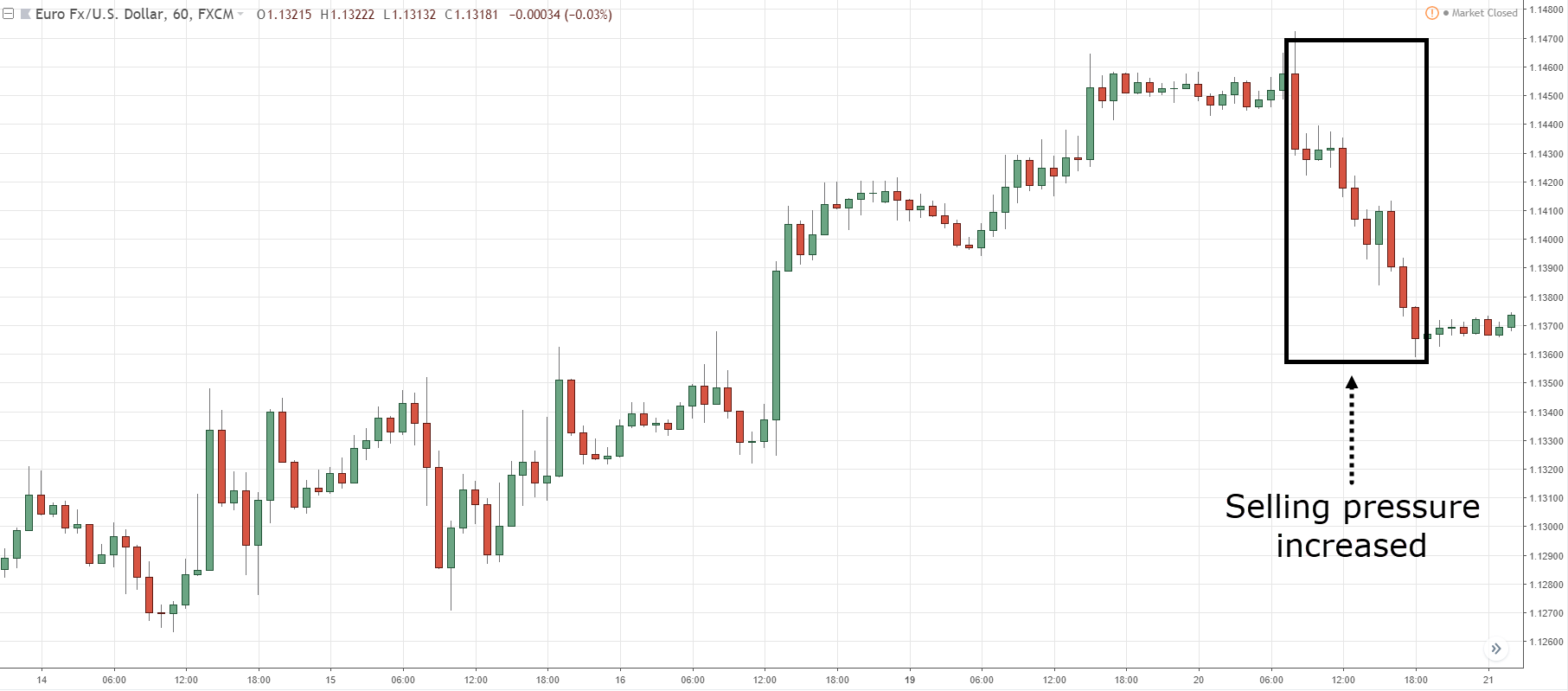
Again, this doesn’t guarantee the market will reverse from here. But it’s another sign the buyers are getting weak.
How to identify trend reversal — a break of Support/ Resistance area
As a trend matures, it will move into a distribution stage where both buyers and sellers are in equilibrium (thus looking like a range market).
At this point, it’s clear the area of Support is an important level as it’s the last line of defense for the buyers. If it breaks, it’s pretty much game over for the bulls.
Here’s what I mean:
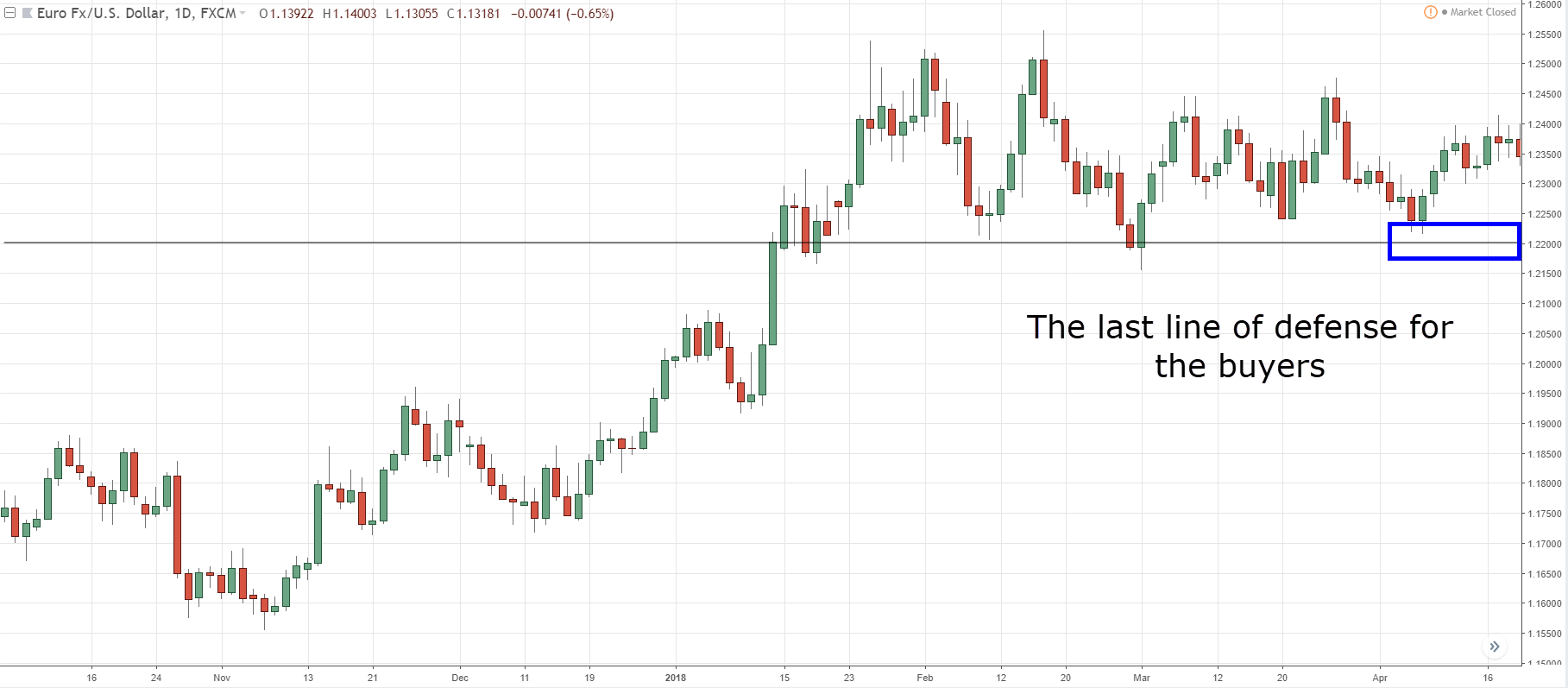
Based on my experience, the more times Support is tested within a short period of time, the greater likelihood it’ll break.
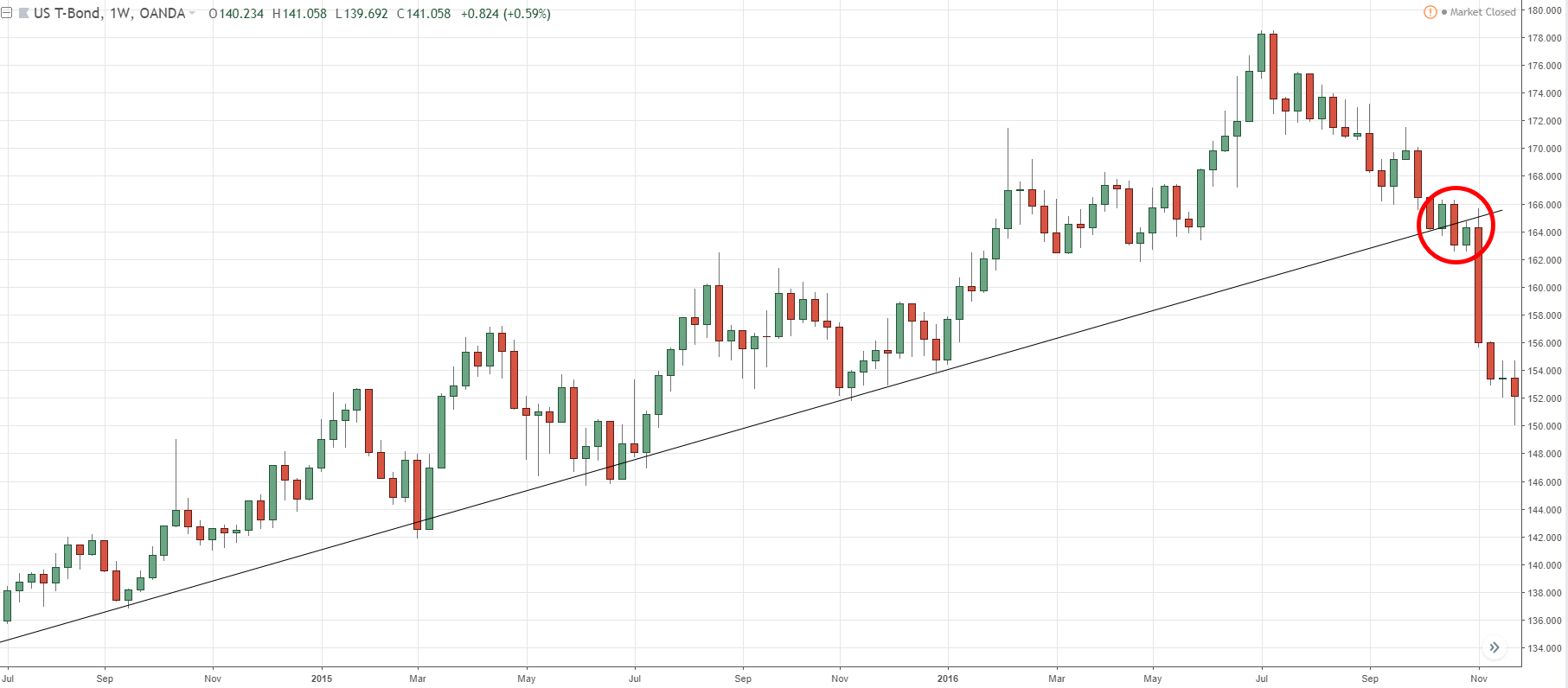
A break of the long-term trendline
Also…
There are times when the market respects an important trendline and if it breaks, it’s a sign that the buyers are getting weak.
An example:
So what you’ve learned earlier are “analysis” techniques to help you analyze when a trend will reverse.
But that’s not enough because the structure of the markets is always changing. Sometimes it respects Support or Resistance, the next time it could be trendline, and etc.
So in the next section, you’ll learn “predictive” techniques to help you identify high probability scenarios where the market is likely to reverse.
Read on…
Possible areas where the market could reverse — higher timeframe structure
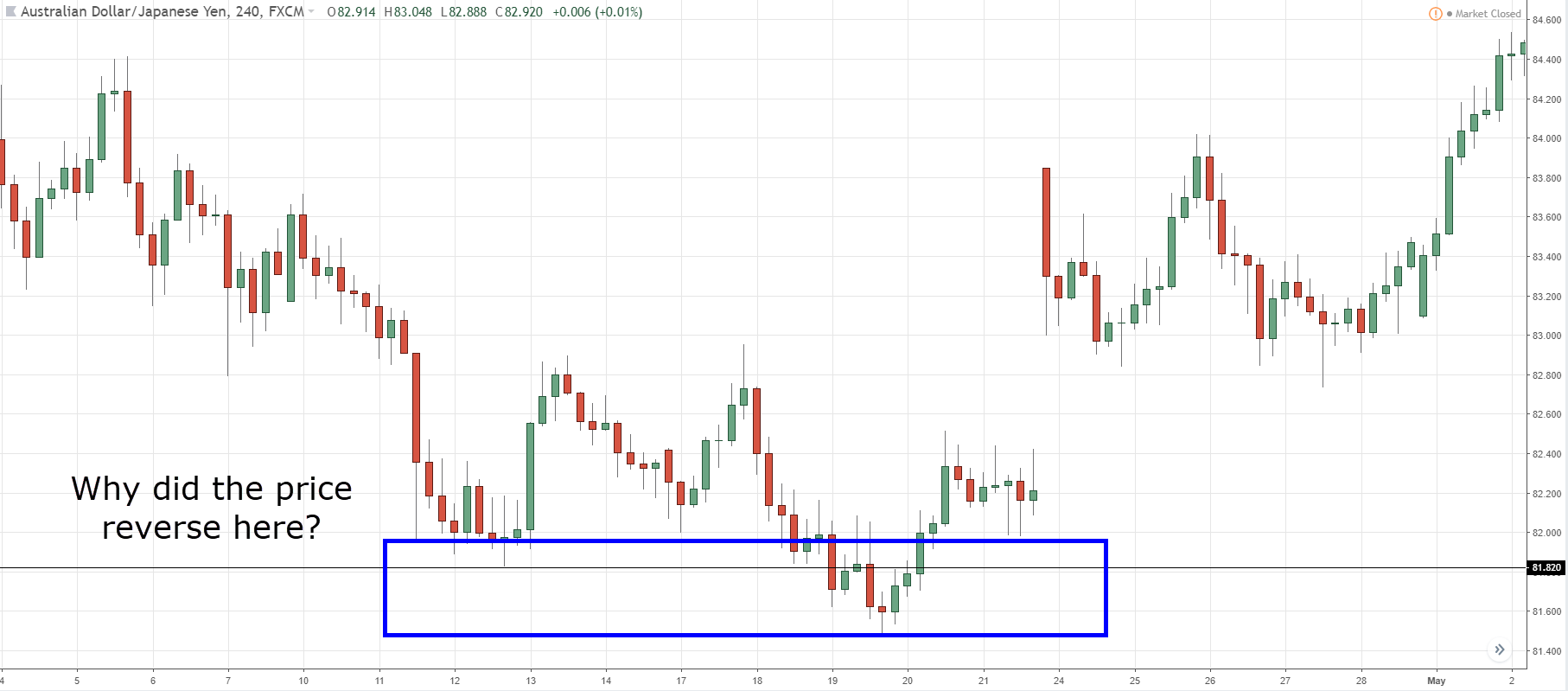
It’s no surprise the higher timeframe carries more weight than the lower timeframes. This means a Support on the weekly timeframe is more significant than a Support on a 1-hour timeframe.
So, if you see the market suddenly reverse, chances are, it came into a higher timeframe structure (like Support or Resistance) and reverse from it.
Here’s an example:
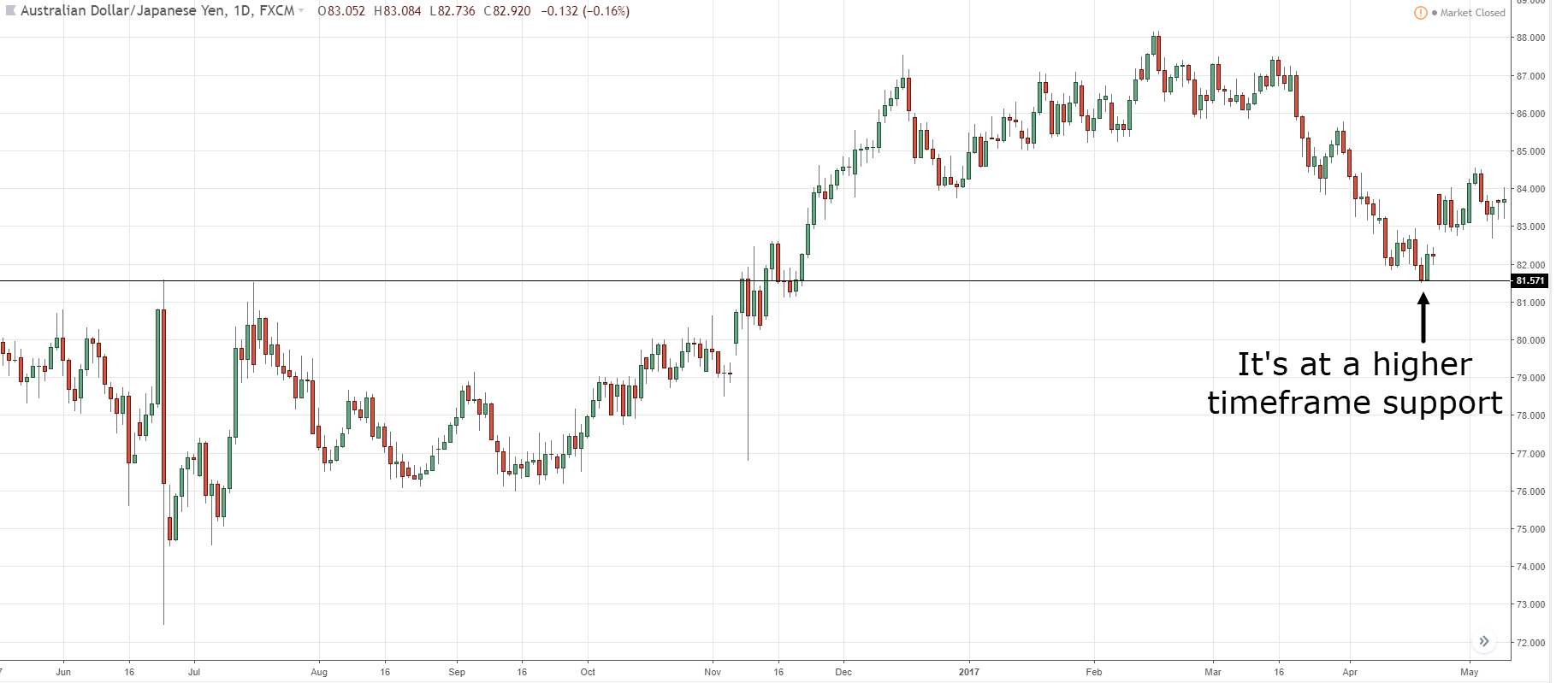
And this can be useful for two reasons:
- You can find high probability reversal areas based on the higher timeframe structure
- You can avoid poor setups that trade directly into higher timeframe structure
Powerful stuff right?
Let’s move on…
Overextended markets
First, let’s define mean reversion and overextended markets.
Mean reversion – This means trading back towards its average value (that could be defined using Moving Average, Bollinger Bands, or even a trend reversal indicator, etc.)
Overextended markets – This means the market is “overstretch” away from its average value.
Here’s the thing:
The market seldom trades in one straight line. If it’s “overstretch”, it usually retraces before trading higher again (that’s why you get higher highs and lows in an uptrend).
Now you’re probably wondering:
What does an “overstretch” market look like?
(Hint: you don’t quite need any reversal indicators to help you spot this.)
Here’s an example:
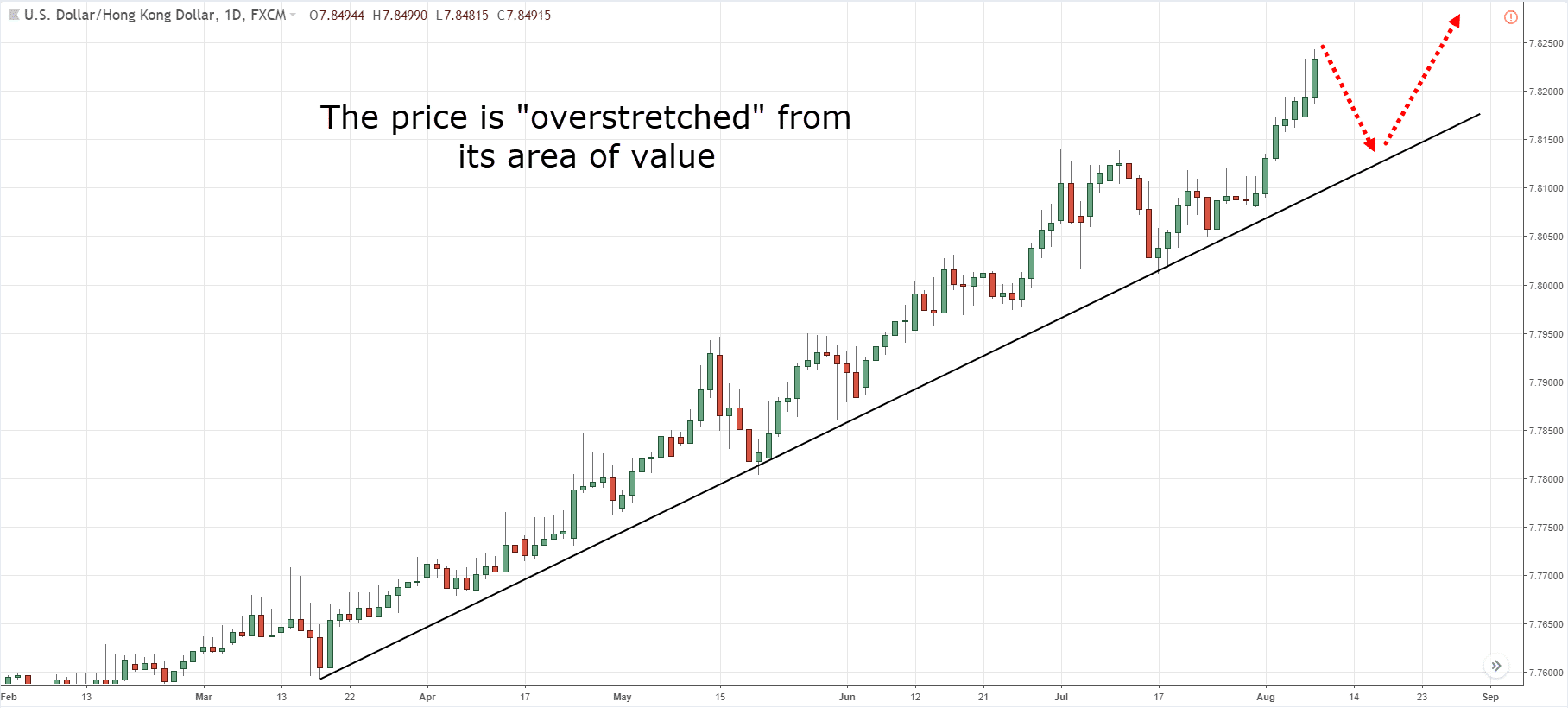
So when you spot an overextended market, it’s prudent to wait for the market to retrace before taking a position. Or, if you’re a mean-reversion trader, you can take a counter-trend trade towards the mean.
Let’s move on…
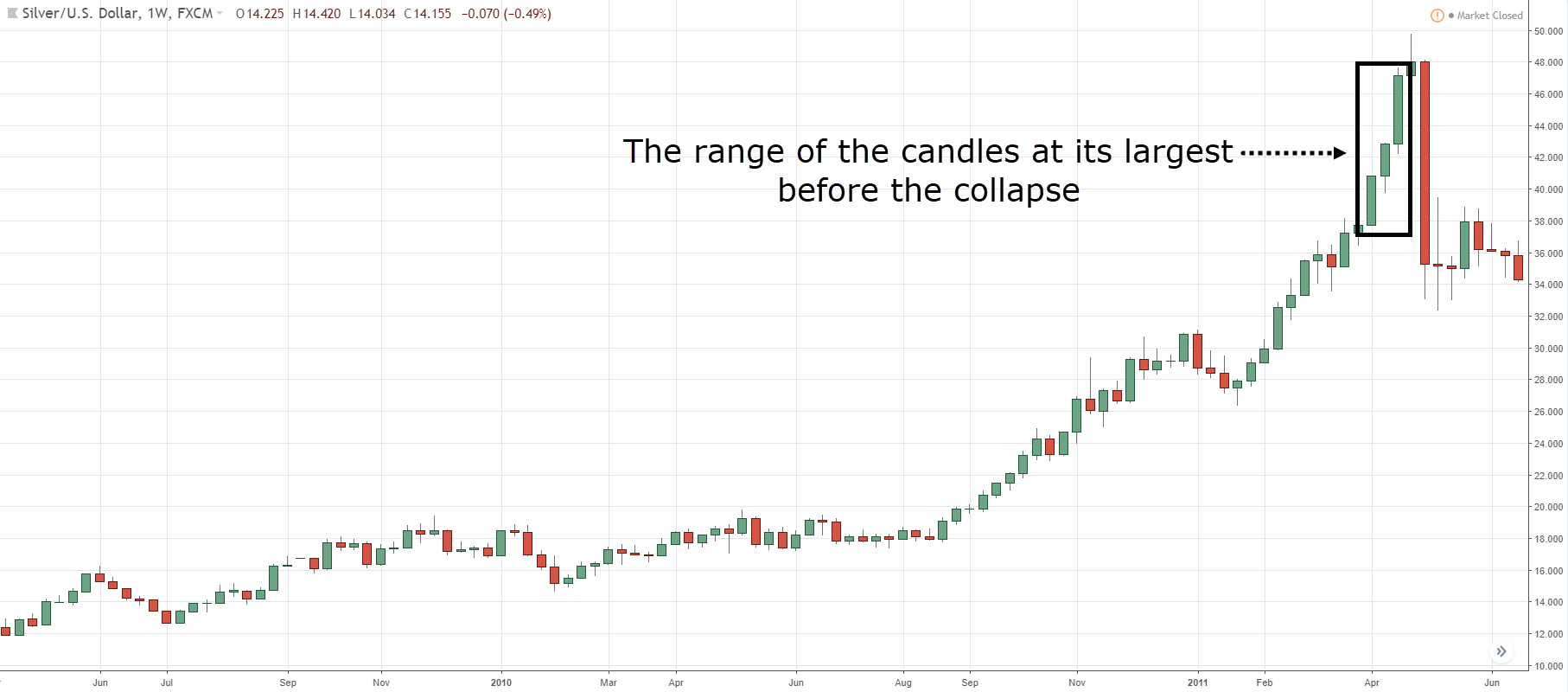
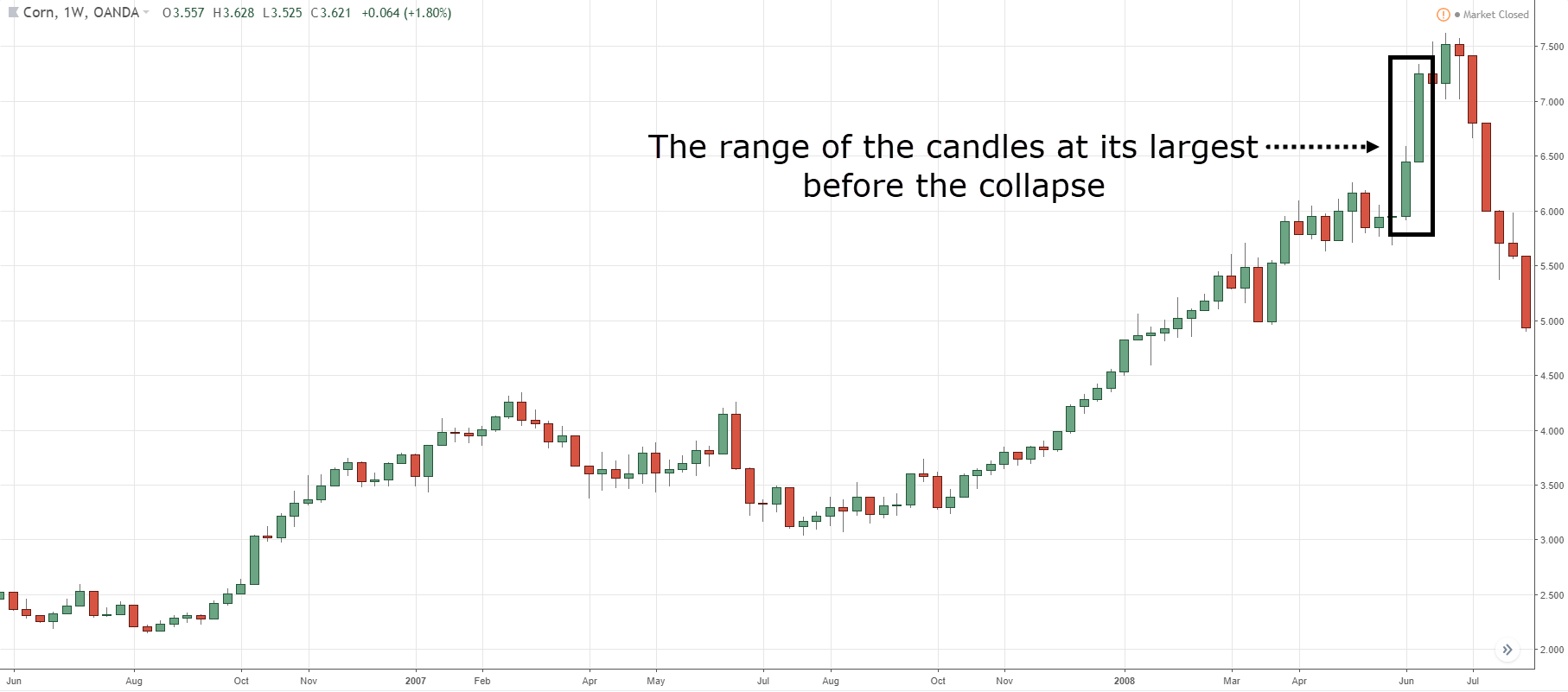
Parabolic move
A parabolic move usually occurs when it is in a long-term uptrend and the market suddenly goes ballistic and moves vertically higher (like a rocket taking off).
You’ll also notice that the range of the candles in the parabolic move is much larger compared to the earlier ones.
When this occurs, it’s usually a sign the uptrend is coming to an end as the “dumb” money is rushing to enter the markets, while the “smart” money is exiting their trades. Thus, what you get is a huge spike in volatility.
So, if you notice a market that’s been trending for a while and it suddenly goes parabolic, it’s a good sign that the top is near.
Here are a few examples:
I know identifying parabolic move can be subjective. So here’s one of the many reversal indicators you can keep an eye on…
Use the average true range indicator and identify the volatility over the last few years. If it’s at multi-year highs, then it’s a warning sign.
You can even use the Keltner Channel as a trend reversal indicator to “predict” market turning points.
How to identify high probability trend reversal
So…
You’ve learned the different techniques to identify trend reversal and to anticipate market turning points.
But here’s the thing:
You don’t want to use any of this technique in isolation because it usually results in a low probability trend reversal.
However, when you combine a few techniques together, you can spot some high probability trend reversals. Here’s how…
Sugar Weekly
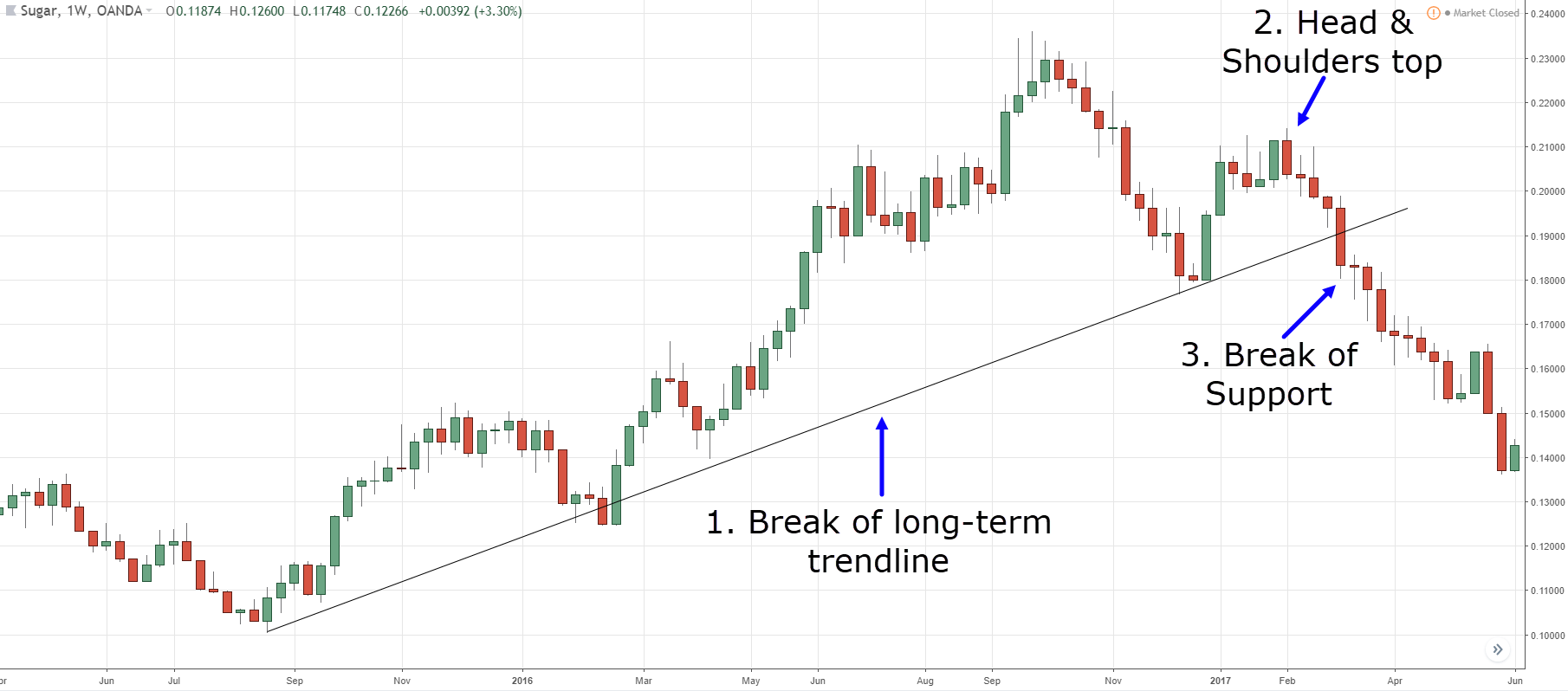
The last line of defense for Sugar was the long-term trendline and area of Support. It was eventually broken with price forming a head & shoulders.
Corn Weekly
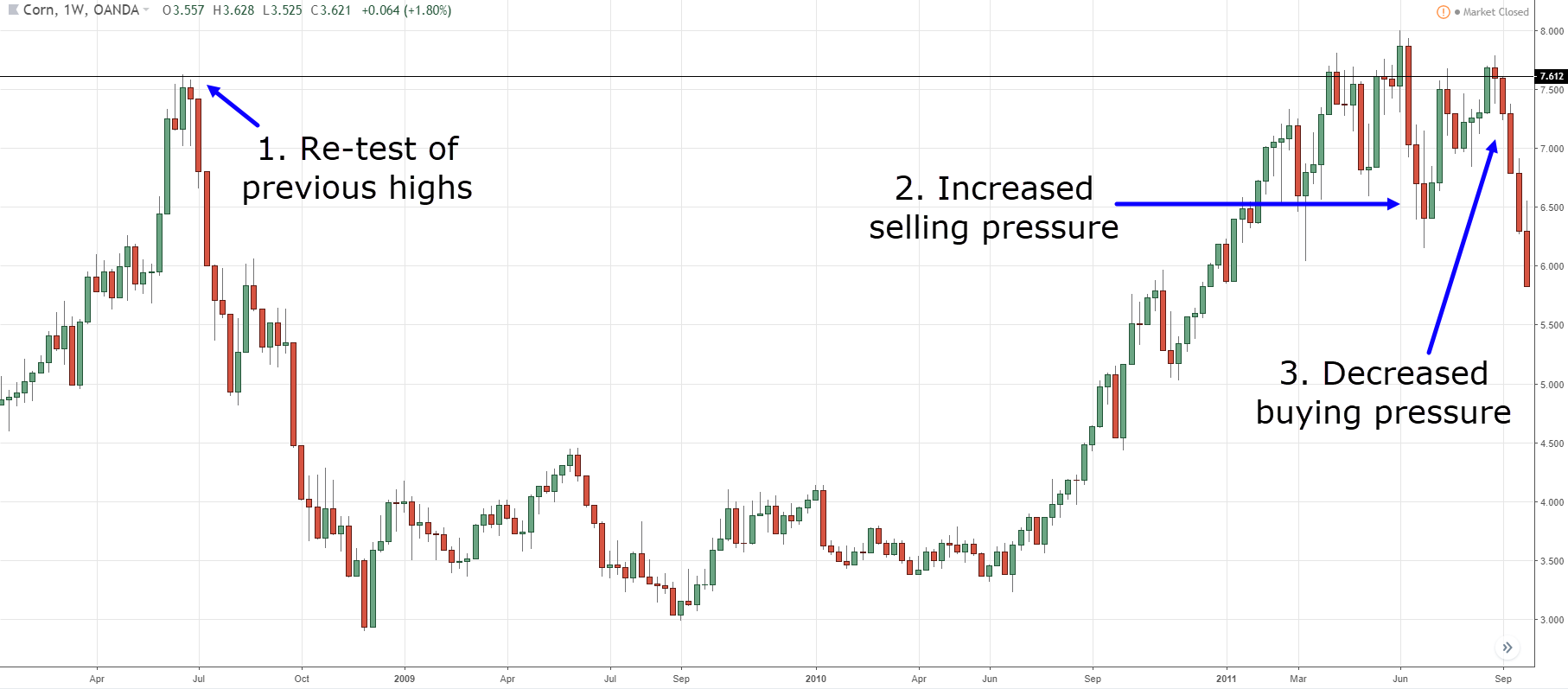
Corn re-tested a previous high with strong momentum.
However, there were red flags as the selling pressure increased (large bearish candles), and the buying pressure decreased (small bullish candles).
Plus, you’ll notice one of the common trend reversal patterns…
You could see a small head & shoulders pattern signaling that the buyers were not able to break above the highs.
Now there are no hard and fixed rules to which combination is the best. It’s all about reading the price action of the markets to find high probability market turning points.
And no matter how confident you are, you still need a plan to enter, exit and manage your trades… using proper risk management.
Frequently asked questions
#1: How do I confirm that a parabolic move would reverse or continue even higher?
There’s no way to tell for sure. But what I pay attention to is the depth of the pullback.
If the pullback is shallow with small range candles, then chances are, the market will stage another rally higher.
However, if the pullback is very steep with large retracement candles, there’s a good chance that the parabolic move is over and the market could move into a range or reverse altogether.
#2: Are there any common chart patterns to trade trend reversals?
Yes, there are. If you want to discover more trend reversal patterns to trade trend reversals, then check these out:
- Inverse Head and Shoulders Pattern Trading Strategy Guide
- Head and Shoulders Pattern Trading Strategy Guide
- The Double Bottom Pattern Trading Strategy Guide
- The Complete Guide to Triple Top Chart Pattern
Summary
There is no method that can show you how to identify trend reversal with 100% accuracy.
Likewise, there’s also no such thing as the best trend reversal indicator out there.
Instead, what you can do is to read the price action and identify the possible area where the market could reverse.
Some of the things you can look at are:
- Identifying weakness in the trending move
- Identifying strength in the retracement move
- A break of key Support or Resistance
- A break of long-term trendline
- The price is coming into higher timeframe structure
- The price is overextended
- The price goes parabolic
The more confluence factors there are, the greater the likelihood of a trend reversal.
Now, over to you…
How do you identify trend reversal?
Leave a comment below and let me know your thoughts.